
The 10 Best Free Business Directory List for 2026
A business owner usually reaches for a free business directory list after the same frustrating pattern repeats. The website looks fine, the service is solid, and existing customers are happy, yet new customers still say they couldn't find the business on Maps, saw old hours on a directory, or called the wrong number from an outdated profile. The problem usually isn't visibility alone. It's fragmented visibility.
That's why a smart directory strategy works better than dumping a business onto every site that accepts a listing. According to OnToplist's summary of BrightLocal local search findings, 31% of the top 10 organic results for average local searches are business directory pages. That means directory profiles often rank before the company's own website. A neglected profile doesn't just sit in the background. It can become the version of the business that customers see first.
This free business directory list is built as a practical roadmap, not a giant dump of random URLs. The focus is on the platforms that matter most, how to verify them properly, and where the actual trade-offs are. Some directories are foundational citations. Some generate reviews. Some drive neighborhood discovery. A few are mostly useful for trust signals and NAP consistency.
The winning approach is simple. Claim the important listings first, standardize business information, verify every profile, and then automate review collection so the profiles don't look abandoned. That last part matters because a polished listing with no fresh feedback often underperforms a simpler profile with active customer reviews and timely responses.
Table of Contents
1. Google Business Profile (GBP)
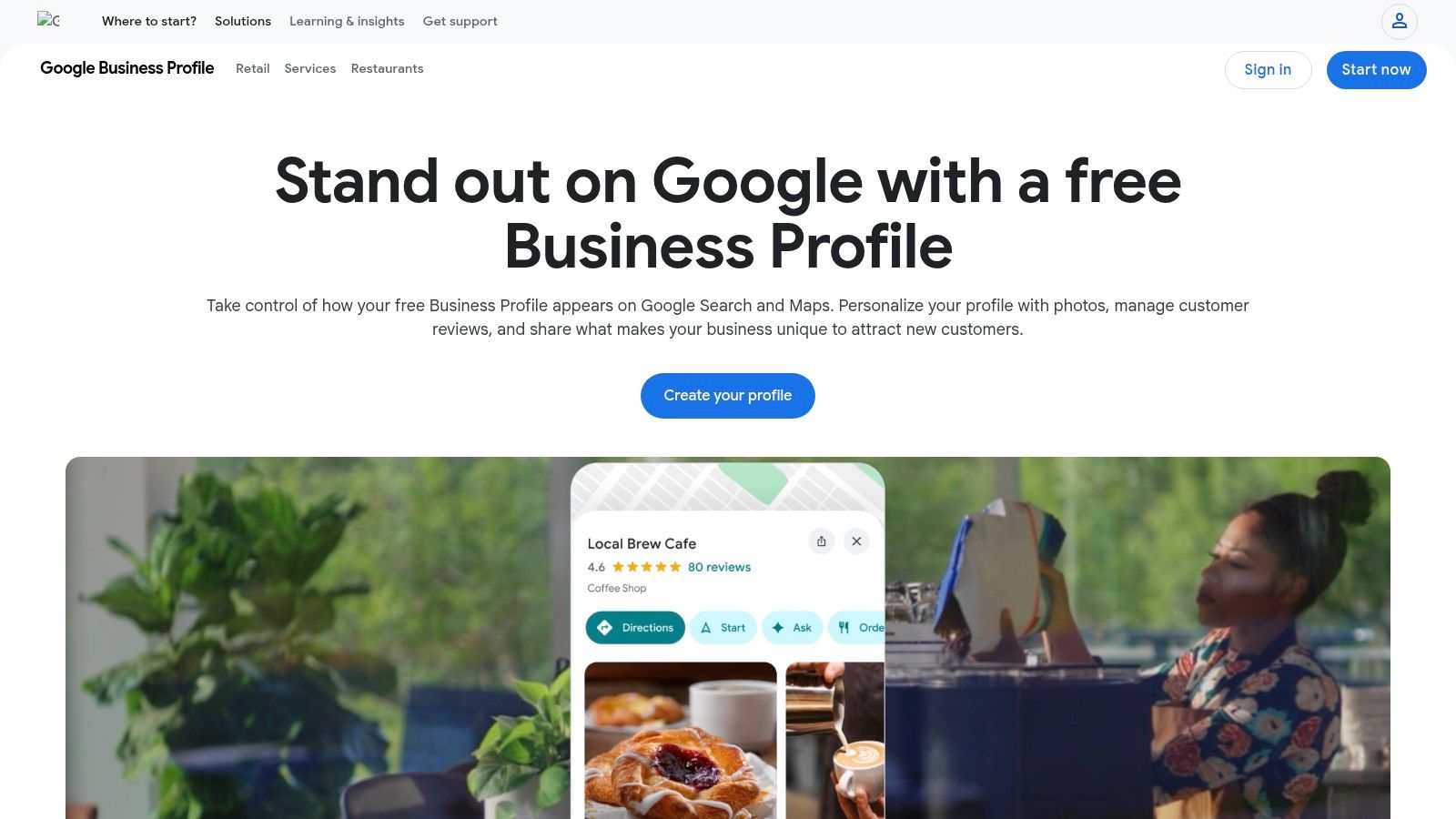
Google Business Profile is the first listing to claim because it controls how a business appears across Google Search and Maps. For most local companies, this profile becomes the primary storefront before a visitor ever reaches the website. It supports address or service area setup, hours, phone, website links, photos, service menus, products, posts, Q&A, messaging, and multi-location management.
The biggest advantage is reach. The profile can show up when a customer searches a brand name, a nearby service, or a category plus city. That visibility also affects review velocity because many customers leave feedback directly from the listing.
Why GBP comes first
Google Business Profile does the most work with the least friction once it's set up correctly. It's also the listing most likely to expose errors fast. If a holiday hour is wrong or a duplicate profile appears, customers usually find it here first.
Practical rule: Build the master version of the business identity in GBP first, then copy that exact name, address, phone, hours, and category logic into every other directory.
Two things trip businesses up. Verification can be strict, and category choices need attention because they shape relevance. The profile also needs upkeep. Fresh photos, accurate hours, service updates, and review responses keep it from looking stale.
Reviews are where this profile compounds its value. A business that wants to understand the connection between local trust and conversions should pay attention to why Google reviews matter for local businesses. Reviewzie helps here by automating review requests after a completed job, visit, or appointment, so the Google profile keeps collecting recent feedback instead of relying on staff to remember manual follow-up.
2. Apple Business Connect
Apple Business Connect is the listing to claim when a business wants direct control over how it appears in Apple Maps and other Apple surfaces. For companies in markets with heavy iPhone use, this isn't optional. It's the cleanest way to manage name, address, hours, photos, and showcase content inside Apple's ecosystem.
Apple's interface is usually less crowded than Google's, which can make profile management feel simpler. It also complements Google well. A business that only maintains GBP leaves a visibility gap for customers who rely on Apple Maps, Siri, or wallet-based location flows.
Best use case
Apple Business Connect is especially useful for restaurants, clinics, retail stores, salons, and service businesses with physical locations. Those businesses benefit most when map accuracy and business hours are critical. A wrong pin location in Apple Maps can create the same friction as a wrong phone number anywhere else.
The trade-off is verification. Apple often asks for documentation, and the process can feel stricter than smaller directories. That's inconvenient, but it also filters out sloppy setup.
A practical setup approach works best:
Match GBP exactly: Use the same business name, primary phone, website URL, and category language.
Upload useful images: Choose storefront, interior, team, and product or service photos that help a customer recognize the business fast.
Check pin placement manually: Don't assume Apple placed the marker correctly, especially in plazas, multi-tenant buildings, and service complexes.
A free business directory list should always include Apple near the top because it covers a major discovery channel that businesses often ignore until a customer complains.
3. Bing Places for Business
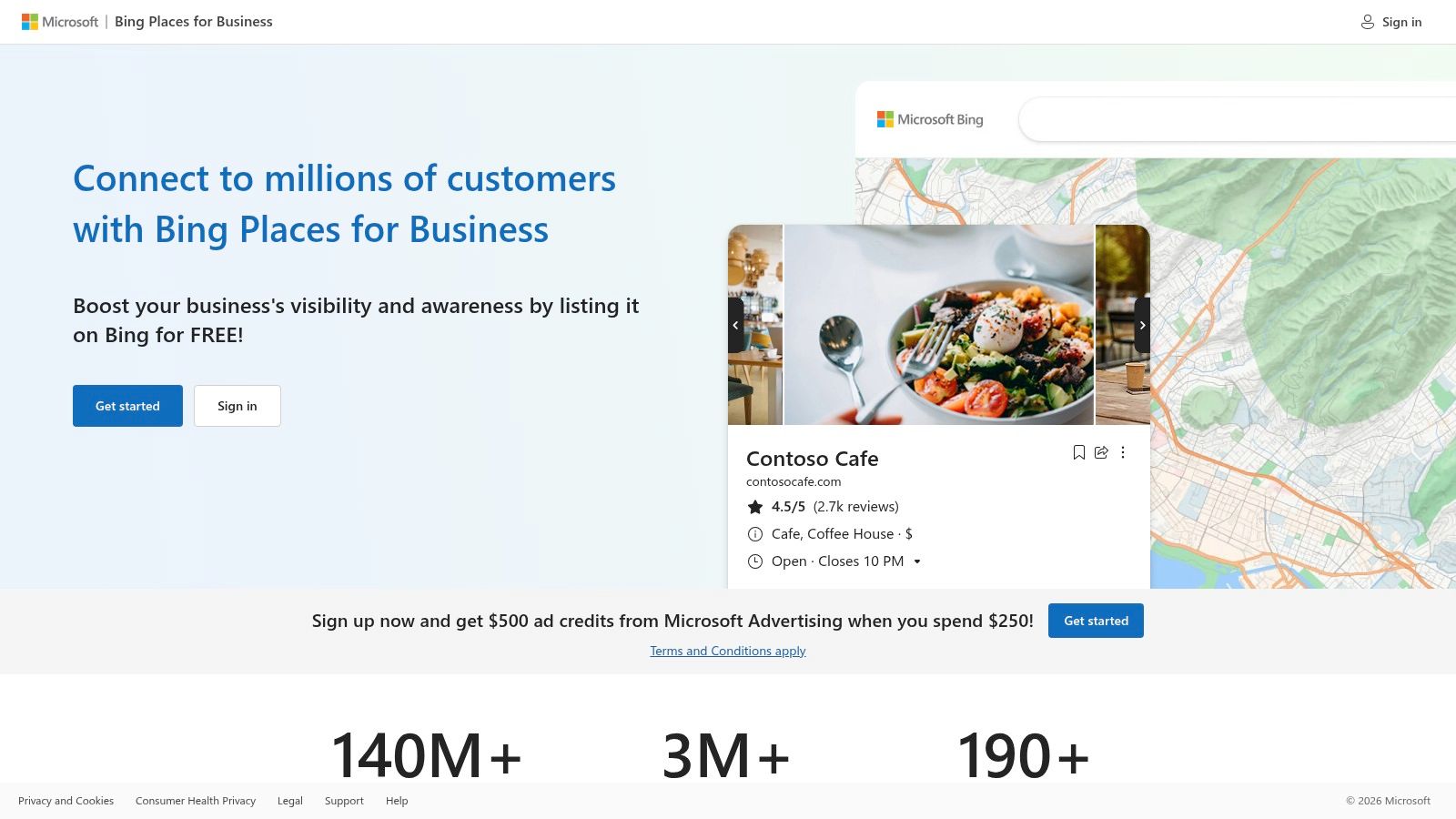
Bing Places for Business is usually the quickest second-tier listing to activate after Google. Microsoft makes setup easier with profile imports, which is useful for owners who don't want to rebuild basic data from scratch. It supports business details, hours, photos, and bulk uploads for chains or multi-location brands.
This listing rarely creates the same volume of customer interaction as Google, but that's not the point. It fills in an important gap across Bing Search, Bing Maps, and Microsoft-connected surfaces. For many local businesses, it's a low-maintenance citation that still deserves a clean setup.
Where Bing fits
Bing works best as a support channel. It's part visibility play and part consistency play. A business doesn't need daily attention here, but it does need accuracy.
There's also a strategic reason to include it in a serious free business directory list. SQ Magazine's 2026 projection on directory automation states that AI-powered directory platforms now auto-generate and refresh approximately 60 to 70% of new entries on leading SaaS-style directories, and short-form video on business profiles has driven engagement lifts of around 50%. That shift means businesses can't assume a stale or partial profile will stay invisible. Automated systems increasingly create, refresh, and surface business data whether the owner manages it actively or not.
An unclaimed listing can still become visible. It just won't tell the story the business wants customers to see.
For businesses tracking local ranking movement, Bing should sit alongside Google in visibility monitoring. Reviewzie's Geo Grid tool for local map visibility helps teams see where listings are strong and where location-based visibility drops off, which is useful when map presence needs a clearer benchmark.
4. Yelp for Business
Yelp for Business matters most for restaurants, home services, wellness providers, and local retail. Customers often use Yelp with strong buying intent. They're not just browsing. They're comparing options, checking photos, reading reviews, and deciding whom to call.
The free page lets businesses claim the listing, update business information, add services, upload photos, respond to reviews, and manage messages or quote requests in supported categories. Even without paid products, Yelp can influence conversion decisions heavily in review-sensitive industries.
What Yelp does well
Yelp is strong at pre-purchase validation. A customer who already heard of a business often visits Yelp to confirm whether the place feels trustworthy. That's why profile presentation matters. Sparse photos, missing services, and unanswered reviews can weaken a good business.
The trade-off is familiar. Yelp pushes upsells aggressively, and review filtering frustrates owners who expect every review to display exactly as submitted. That doesn't make the platform useless. It just means businesses should use the free profile well before considering paid add-ons.
A few practical moves help:
Lead with proof: Add real photos of the location, team, work quality, menu items, or finished projects.
Write service detail clearly: Category pages are crowded, so vague descriptions don't help customers compare.
Respond calmly: Public responses matter on Yelp because future customers read them as much as the original complaint.
Reviewzie solves the low-review-volume problem that hurts Yelp and every other listing. According to Reviewzie's feature overview, automated review requests via SMS and email can increase review response rates by 30 to 40% compared with generic methods. That's useful when staff forget follow-up or send untimely requests. A restaurant, for example, can trigger a review request right after a meal rather than relying on a generic message later.
5. Facebook Page (Meta)
Facebook Pages still deserve a place on a free business directory list because they combine directory visibility with social proof, messaging, and repeat engagement. For some businesses, especially restaurants, gyms, salons, clinics, and local shops, Facebook acts less like a social network and more like a public business profile customers expect to find.
A Page can display business details, posts, photos, reviews, updates, and direct messages through Messenger. It also connects naturally with Instagram and other Meta tools, which makes it useful when a business wants one content workflow to support multiple surfaces.
Where Facebook still helps
Facebook is strongest when customers want signs of life. A dormant website can still convert if the fundamentals are strong. A dormant Facebook Page often creates doubt because customers expect current posts, recent comments, and visible responses.
That doesn't mean every business needs daily posting. It does mean the basics should stay current. Hours, category, phone number, website, and service descriptions need the same discipline used on map listings.
A Facebook Page works best when it answers simple customer questions fast. Is the business open, active, responsive, and trusted?
The downside is platform instability. Features move around, interfaces change, and review or recommendation settings can feel inconsistent. Still, the Page is valuable because it gives customers another branded surface they can verify quickly.
For service businesses, Facebook often supports the middle of the buyer journey. A homeowner may find the business on Google, then check Facebook for recent jobs, neighborhood comments, or responsiveness before making contact. That's why it belongs in a practical roadmap, not just a vanity list.
6. Nextdoor Business Page
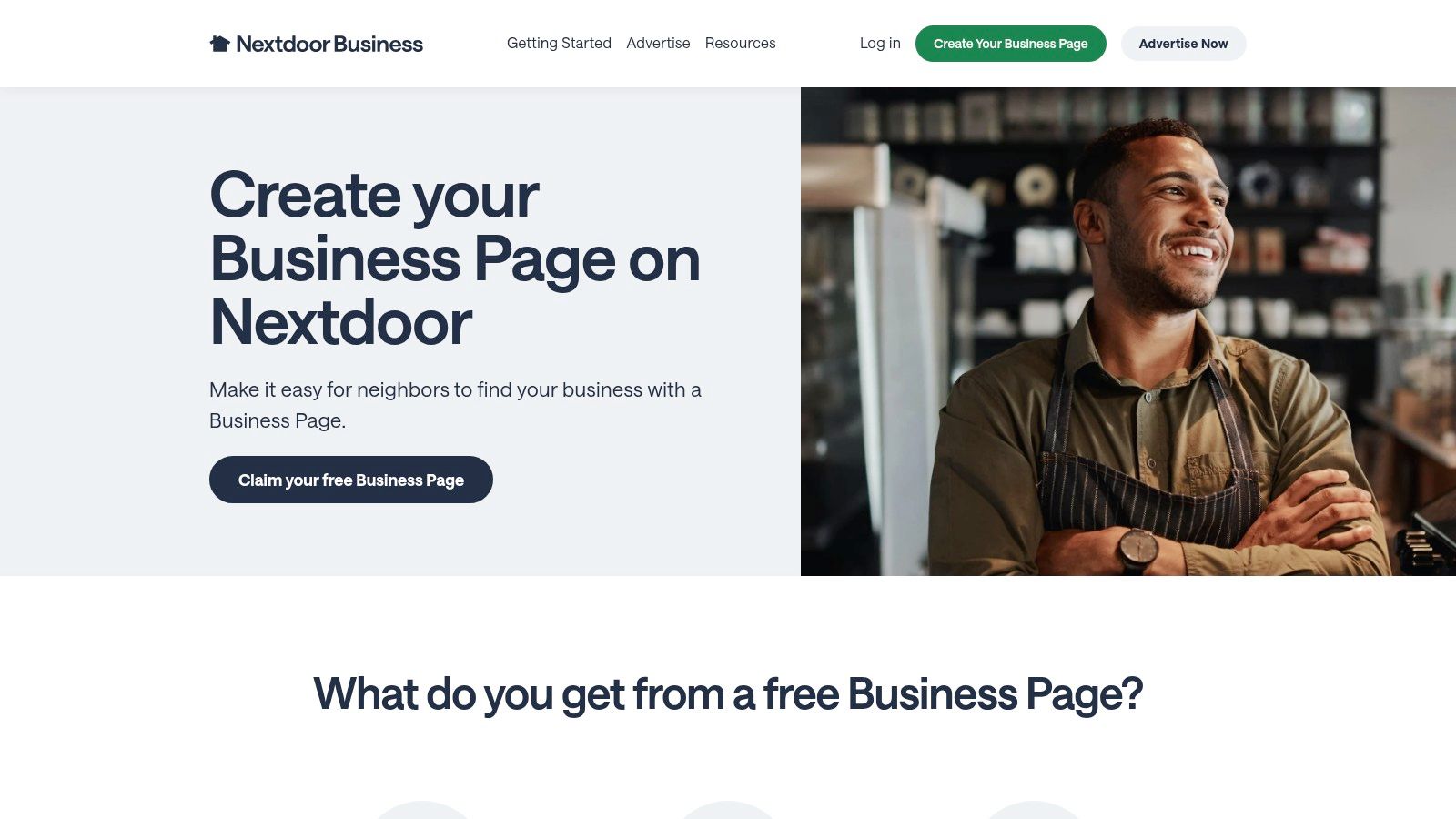
Nextdoor Business Page is one of the most useful niche choices for neighborhood-based service companies. Plumbers, HVAC providers, pet services, gardeners, cleaners, wellness practitioners, and local retailers usually get the clearest value because the platform revolves around local recommendations and nearby trust.
The free page lets a business create or claim a profile, share updates, post offers, and use tools like events, polls, video, and business posts. The platform isn't trying to behave like a giant search engine. It works more like structured word of mouth inside a neighborhood feed.
Strongest fit
Nextdoor performs best where the customer decision is highly local. A resident looking for a dog groomer, handyman, or dentist often cares more about nearby recommendations than broad web presence.
That local trust dynamic can also expose weak profiles fast. If contact information is incomplete or the business page looks inactive, nearby prospects move on. Posting discipline matters here, but restraint matters too. Businesses that overpost promotional content can look spammy and lose credibility.
A better operating style is simple:
Post useful updates: Seasonal service reminders, community participation, or limited local offers work better than repetitive sales copy.
Keep response times tight: Neighborhood platforms reward fast human replies.
Use local language: Mention service areas clearly so residents know whether the business serves their part of town.
Nextdoor isn't a replacement for Google or Apple. It's an amplifier for businesses that win through local familiarity.
7. Better Business Bureau (BBB) Business Profile
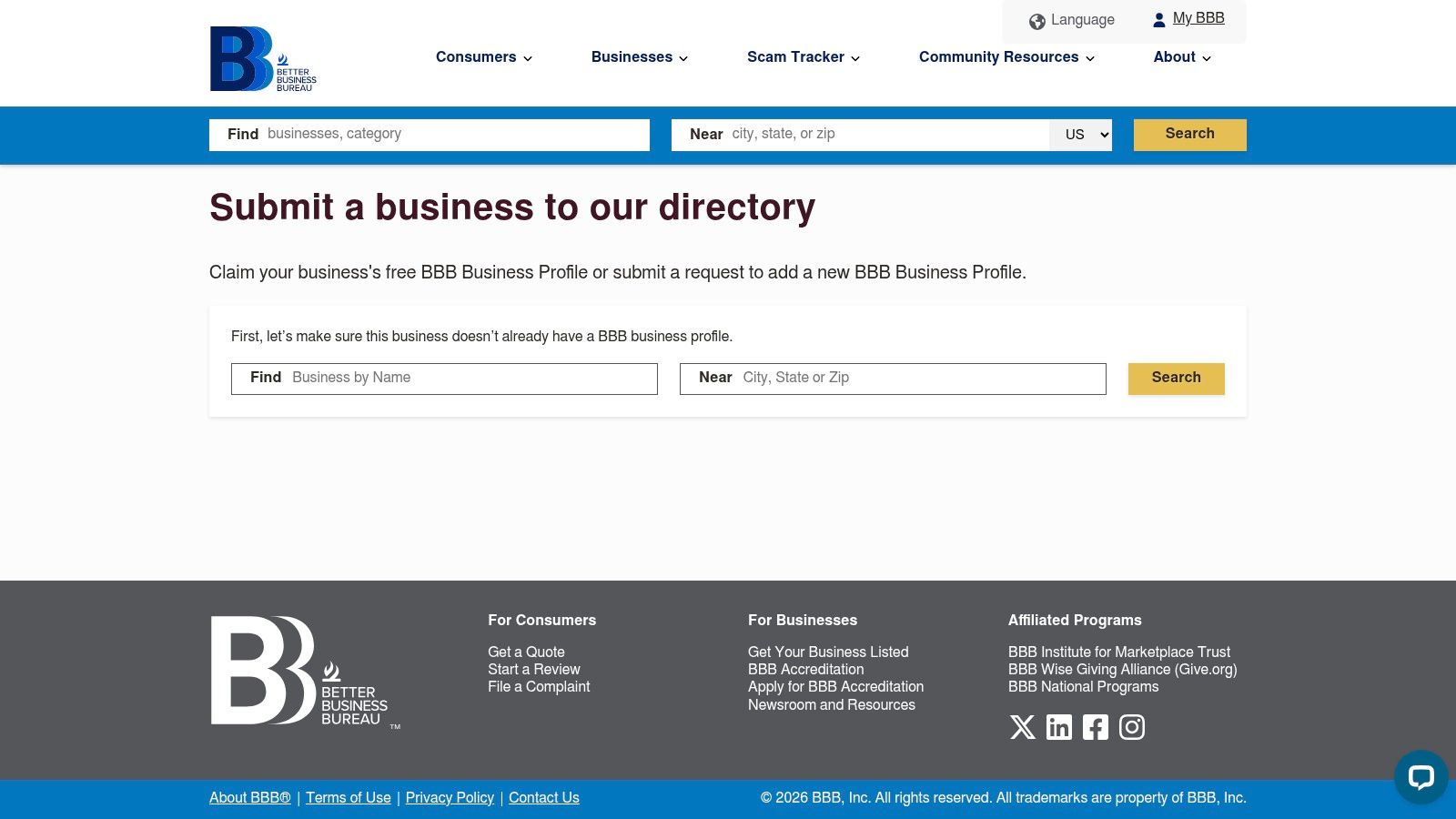
A BBB Business Profile plays a different role than map and review listings. It's less about discovery volume and more about trust validation. Customers often check BBB when they're evaluating a business that involves risk, cost, contracts, or service disputes. That makes it especially relevant for home services, legal practices, healthcare-adjacent providers, movers, contractors, and other businesses where reputation concerns can slow conversion.
The free profile lets businesses submit or claim their listing, display core information, and respond publicly to complaints. Paid accreditation is separate. The free profile still matters because many buyers look at complaint handling, responsiveness, and business legitimacy before they decide.
When BBB matters most
BBB matters most when the customer is cautious. Someone replacing a roof or hiring a repair company may review BBB even if they found the business somewhere else first. In that sense, BBB often acts as a secondary screening layer.
The challenge is obvious. Negative information can live on the profile, and accreditation upsells are common. Still, ignoring BBB is usually worse than managing it. An unclaimed profile gives the business less control over how that trust signal appears.
Reviewzie helps reduce one of the biggest risks before it reaches public directories. According to Reviewzie's pricing page, private feedback routing mechanisms can prevent up to 25% of negative public reviews from being posted online by diverting dissatisfied customers to a private form. That's useful for clinics, contractors, and service providers that need a chance to resolve issues before customers post complaints publicly.
8. Trustpilot
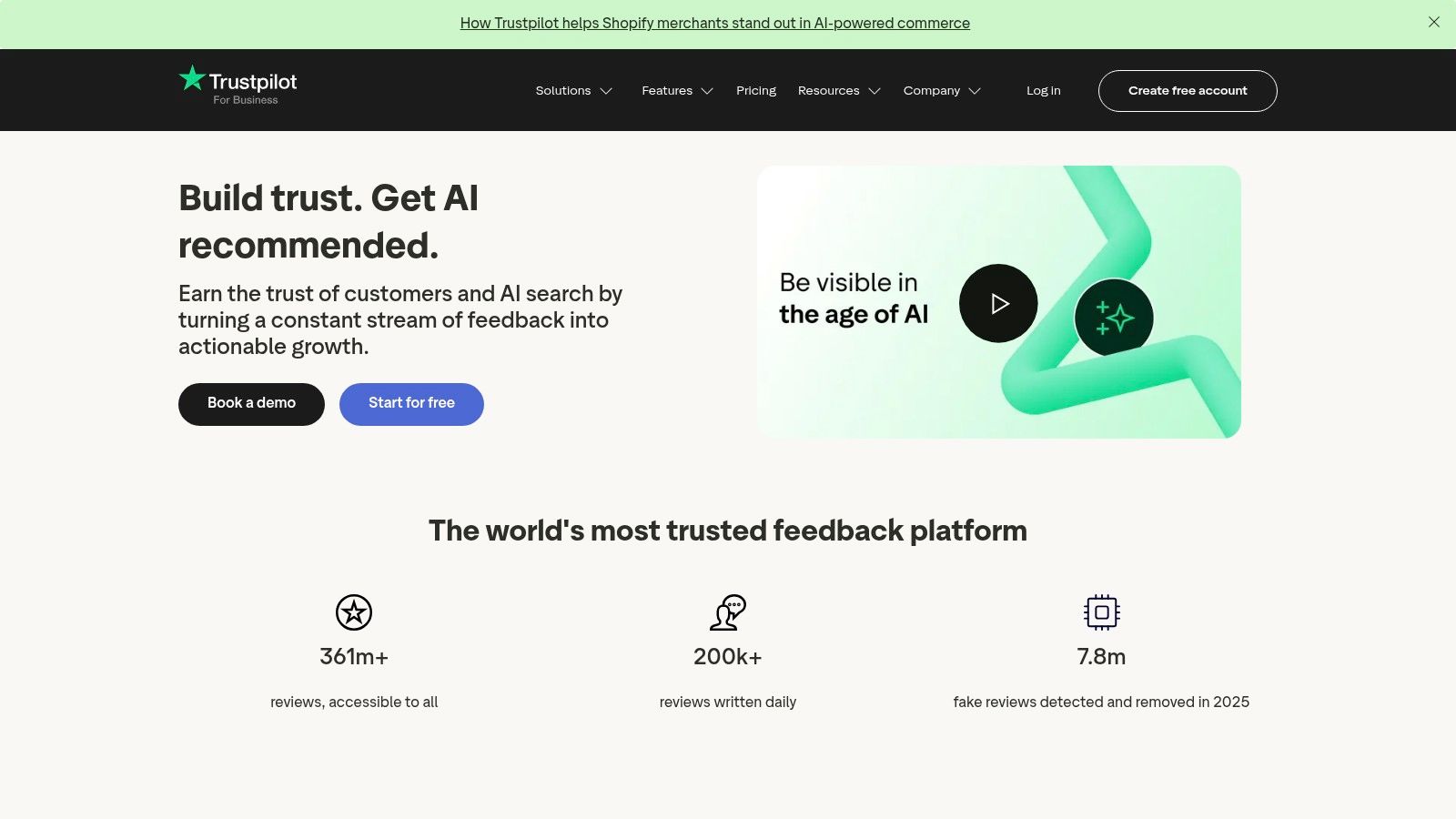
Trustpilot works well for businesses that need review visibility beyond maps. It's a public review platform where any business can be reviewed, and the free profile lets companies claim their presence, respond to reviews, and use basic invitation features within platform guidelines.
Trustpilot tends to fit businesses with broader brand search behavior. That includes ecommerce brands, agencies, software providers, professional services, and local businesses that want another trust layer outside Google and Yelp. It also has a strong footprint in search results, which makes profile quality important.
Best fit for Trustpilot
Trustpilot helps when buyers compare several providers and want third-party reassurance. It's less about geographic proximity and more about credibility at the evaluation stage. A clean profile with timely responses can support conversion even when the buyer didn't begin on Trustpilot.
The trade-off is openness. Businesses can attract unsolicited or negative reviews, and profiles typically aren't removable just because the owner dislikes public feedback. That means review response process matters as much as review generation.
A useful way to think about Trustpilot is portfolio coverage. Businesses that monitor only Google often miss reputation conversations elsewhere. Reviewzie's guide to major business review sites helps teams understand which platforms deserve active monitoring based on industry and customer behavior.
“Claim every review profile that can rank for the brand name, even if it isn't the main source of leads.”
That advice keeps businesses from being surprised by an unmanaged profile that surfaces during a high-intent branded search.
9. Yellow Pages (YP.com)
Yellow Pages still belongs in a serious free business directory list, even though it rarely gets top priority. It remains useful as an additional citation source, a branded directory presence, and a backup discovery channel for certain customer segments and service categories.
The value here isn't excitement. It's completeness. A YP listing gives businesses another place to standardize NAP details, add media, and support citation consistency. For companies building local presence methodically, that still matters.
Why it still belongs on the list
One of the biggest mistakes with directories is treating all of them as equal. They aren't. BrightLocal's USA citation resource highlights the strategic difference between a handful of high-trust directories and a bloated list of low-value submissions. That's why YP belongs lower on the priority ladder. It's useful, but it shouldn't consume the time that Google, Apple, Yelp, or category-specific listings deserve first.
The common downside is aggressive sales outreach and variable publishing flows. Businesses should expect some friction. That doesn't make the listing a bad idea. It just means expectations should stay realistic.
A smart way to use YP is as a reinforcement citation. Keep the profile accurate, make sure the website and phone number are correct, and then move on. The goal isn't to turn YP into a content hub. The goal is to make sure another visible directory reflects the business correctly.
10. Manta
Manta has been around long enough to remain a practical citation option for small and mid-sized U.S. businesses. It offers a straightforward free listing and claim flow, plus a simple profile format for business details, description, and links. It won't replace the major map and review platforms, but it can support discoverability and profile consistency.
Manta also earns its place because it's easy to work with. Businesses that need a clean additional listing without a lot of feature complexity can usually get value from a complete, accurate profile here.
Where Manta earns its place
Manta works best near the end of the first setup wave. Once the core listings are clean, Manta helps round out citation coverage without demanding much ongoing attention. It can also surface in long-tail branded or category searches, which gives it some practical SEO utility.
The larger lesson matters more than the platform itself. A free business directory list shouldn't push businesses toward endless submissions. It should help them choose the right directories, verify accuracy, and maintain consistency over time.
That verification step is where many campaigns fail. Hibu's business listings scan tool page describes a common issue with ghost, outdated, duplicate, or unverified listings and points to automated scanners that can identify errors across 50+ sites in minutes. That kind of audit is useful after the first round of claims because businesses often assume submission means the listing is live and correct. It often doesn't.
Top 10 Free Business Directory Comparison
Platform | Core features | Quality & Reach | Pricing / Value | Target audience | Unique selling point |
|---|---|---|---|---|---|
Google Business Profile (GBP) | Listings, reviews, Maps/Search presence, posts, messaging | ★★★★★ Highest local search visibility | 💰 Free (verification required) | 👥 Local businesses, multi-location brands | ✨🏆 Dominant Maps/local-pack SEO impact |
Apple Business Connect | Apple Maps/Siri control, hours, photos, multi-location | ★★★★ Strong in iOS-first areas | 💰 Free | 👥 iPhone-heavy locales, retail & hospitality | ✨ Direct control across Apple surfaces |
Bing Places for Business | Bing Search/Maps listing, Google import, bulk upload | ★★★ Secondary search coverage | 💰 Free, low maintenance | 👥 Brands seeking added Microsoft reach | ✨ Easy Google import; Microsoft exposure |
Yelp for Business | Claim page, reviews, messaging, quotes, analytics | ★★★★ High-intent audience (food/services) | 💰 Free base; advertising upsells | 👥 Restaurants, home services, local retail | 🏆 Category-strong review destination |
Facebook Page (Meta) | Business page, posts, Messenger, reviews, Instagram link | ★★★★ Massive social reach & engagement | 💰 Free (feature changes common) | 👥 Community-facing retailers & services | ✨ Social content + integrated messaging |
Nextdoor Business Page | Neighborhood posts, recommendations, direct messaging | ★★★ Hyperlocal recommendations | 💰 Free | 👥 Home services, local retailers, wellness | ✨ Neighborhood-level word-of-mouth reach |
Better Business Bureau (BBB) Profile | Profile, rating, complaint history, public responses | ★★★ Trusted vetting reference | 💰 Free profile; paid accreditation | 👥 Businesses seeking formal trust signals | 🏆 Formal complaint channel & trust badge |
Trustpilot | Open reviews, invite tools, fraud detection, SEO footprint | ★★★ Broad public review visibility | 💰 Free claim; paid features & widgets | 👥 E‑commerce & national brands | ✨ Strong SEO & transparent review signals |
Yellow Pages (YP.com) | Listing claim, NAP citation, media | ★★ Legacy directory audience | 💰 Free listing; sales outreach | 👥 Older demographics, category-specific users | ✨ Additional citation for local SEO |
Manta | SMB listing, NAP, business resources & guides | ★★ Smaller, long-tail visibility | 💰 Free listing; optional premium | 👥 Small businesses and local services | ✨ Easy claim + citation and resource guides |
Final Thoughts
A good free business directory list isn't a race to collect the most profiles. It's a system for building accurate visibility where customers already search. The order matters. Google Business Profile comes first. Apple Business Connect and Bing Places follow. Then come Yelp, Facebook, and the platforms that fit the business model, reputation risk, and customer behavior.
That priority-based approach matters because directory work can become a time sink when it's handled without strategy. The strongest results usually come from a smaller set of important listings that are complete, verified, and actively maintained. Low-value directories often create more maintenance work than business value.
Verification is the part too many businesses skip. A claimed profile isn't always live. A submitted profile isn't always accurate. Duplicate pages, old hours, wrong categories, missing suite numbers, and unconfirmed phone verification can leave a business with the illusion of coverage while customers still find conflicting information. That's why every listing needs a final check in the live search result, not just inside the account dashboard.
Reviews are the second half of the roadmap. A clean listing with no review strategy usually stalls. Customers compare freshness, response quality, and recent sentiment before they contact a business. That's where automation stops being a convenience and becomes an operating advantage. Instead of asking staff to remember follow-up messages, businesses can trigger requests after appointments, visits, deliveries, or completed jobs. That creates a steadier flow of feedback across the profiles that matter most.
Automation also helps protect reputation, not just grow it. Public review profiles don't distinguish between a one-off service issue and a pattern unless the business actively manages feedback. Routing unhappy customers into a private resolution flow gives the team a chance to fix problems before they spread across Google, Yelp, BBB, or Trustpilot. That's especially important for healthcare practices, home service companies, hospitality operators, and franchises where a few unresolved complaints can shape public perception quickly.
The practical action plan is straightforward. Claim the top listings. Standardize business data using one master record. Verify every profile manually. Add strong photos and service details. Monitor reviews on the platforms that can rank for the brand name. Then automate review requests and feedback routing so the directory presence keeps improving without constant staff effort.
Businesses that follow that sequence usually avoid the biggest directory mistakes. They don't chase hundreds of weak listings. They don't assume setup equals success. And they don't let review management become a manual chore that gets ignored during busy weeks. They build a durable presence, one verified profile at a time.
Reviewzie helps businesses turn directory listings into active reputation assets instead of static profiles. It centralizes reviews from major platforms, automates requests through SMS, email, and WhatsApp, routes unhappy customers to private feedback before they post publicly, and gives teams one place to monitor, respond, and showcase testimonials. For local businesses, franchises, and service providers that want stronger profiles without more manual follow-up, it's worth starting a free trial of Reviewzie.
Authored using Outrank
Comments