
Automotive Reputation Management: A Playbook for Dealers
A dealership manager opens Google before the first coffee is finished and sees the review that sets the tone for the whole day. One star. No context from the advisor. No internal note from the sales team. Just a public complaint, a lower average rating, and the familiar scramble to figure out who dropped the ball.
That's how most stores handle reputation. React late, guess at the cause, and hope a response smooths it over. The problem is that public reviews don't stay isolated to one unhappy customer. They shape how the next shopper judges the store before a call, a test drive, or a service appointment ever happens.
Table of Contents
Why Your Dealership Needs a Reputation Playbook - What a playbook changes
Building a Consistent Review Collection Engine - Set the trigger before staff forget - Choose the channel based on the visit - Keep the ask short and friction-free
Mastering Review Responses and Engagement - Build a response system instead of improvising - Use templates, then personalize the middle
Turning Negative Feedback into a Business Asset - Private feedback protects the public profile - What managers should do with routed complaints
Amplifying Your Best Reviews to Drive Sales - Put proof where buyers hesitate - Turn one strong review into multiple sales assets
Tracking Performance Beyond Star Ratings - The real KPI is operational clarity - How to attribute reviews by department and staff - A practical scorecard for managers
Why Your Dealership Needs a Reputation Playbook
Most dealers don't have a reputation strategy. They have a review problem that keeps recurring.
A sales manager sees a complaint about waiting too long in finance and blames the floor. A service director sees a post about poor communication and assumes the advisor forgot to update the customer. The GM gets pulled into both. Without a playbook, every bad review becomes a debate instead of a fix.
The stakes are obvious. According to industry research, 91% of consumers actively use reviews to locate car dealers and schedule vehicle maintenance, and AutoInc. reports that 88% trust these reviews as authentic and credible in the InMoment automotive reputation management analysis. That means one ignored complaint doesn't just sit online. It can steer the next buyer or service customer elsewhere.
What a playbook changes
A workable automotive reputation management process does three things at once:
Creates consistency: Every sale, service visit, and delivery follows the same review request process.
Shortens reaction time: Managers see new feedback quickly and know who owns the response.
Separates signal from blame: Teams can tell whether the issue came from sales, service, BDC, finance, or a single handoff.
Practical rule: If a dealership can't tell which department created the review, it can't fix the process that caused it.
The stores that handle reputation well don't treat it like a side task for whoever has five spare minutes. They assign ownership, define triggers, and make follow-up part of the customer journey. That's the difference between defending a rating and using reputation as an operating system for sales and service quality.
Building a Consistent Review Collection Engine
A dealership doesn't need more reminders to "ask for reviews." It needs a process that runs when staff get busy, when advisors are buried, and when salespeople are already on to the next customer.
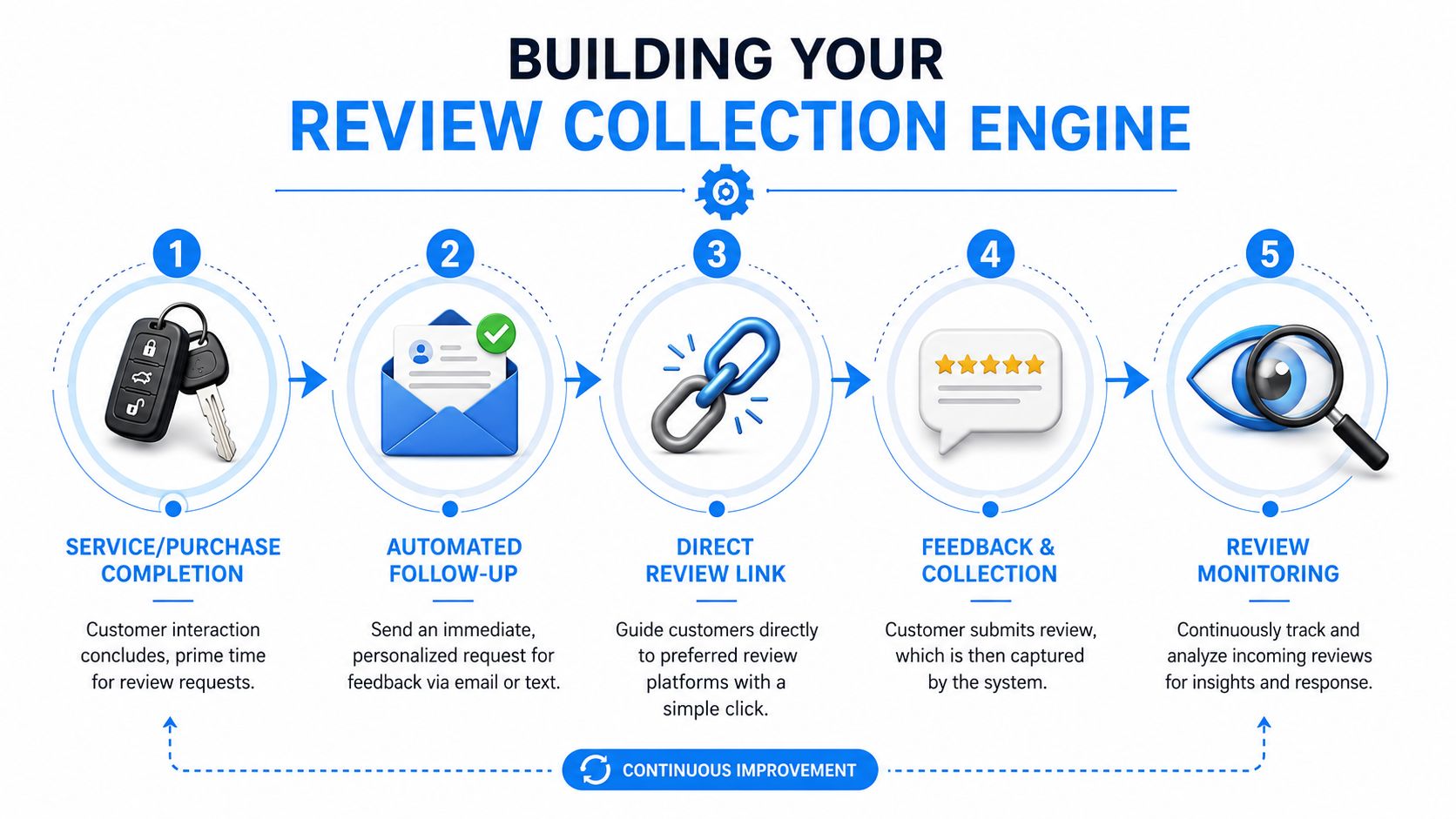
The simplest engine starts with timing. Review requests work best when tied to a completed moment, not left to memory at the end of the week.
Set the trigger before staff forget
For service, the cleanest trigger is when the invoice closes. For sales, it's after delivery, when the customer has had enough time to settle in but the experience is still fresh. The exact delay can vary by rooftop and CRM setup, but the point is consistency.
A practical workflow looks like this:
Service close-out: Trigger a request after the RO is closed.
Vehicle delivery: Trigger a separate request after purchase completion.
No-response follow-up: Send one reminder through a second channel if the first isn't opened.
Manager visibility: Route activity into a dashboard so the store can see which department is generating reviews.
Automation, rather than enthusiasm, holds paramount importance. SMS, email, and WhatsApp each have a role, but manual sending usually breaks the moment the store gets busy.
Choose the channel based on the visit
Not every customer responds the same way. Service customers often respond well to short mobile requests because the interaction was transactional and recent. Car buyers may need a slightly warmer message, especially if the dealership wants a thoughtful review that mentions the salesperson, finance experience, or delivery process.
A quick comparison helps:
Channel | Best use | Weak spot |
|---|---|---|
SMS | Fast follow-up after service or delivery | Too many messages can feel intrusive |
Longer-form ask with room for context | Easy to ignore in a crowded inbox | |
Useful where customers already communicate there | Not every store has it built into workflow |
The message itself should stay short. No corporate language. No long apology in advance for asking. Just a thank-you, a direct link, and a clear action.
Keep the ask short and friction-free
A lot of dealerships lose reviews because the path is clumsy. The customer gets a generic email, clicks through two screens, and quits. The stores that collect reviews consistently make the action obvious and fast.
A strong request usually includes:
A personal cue: Reference the service visit or delivery.
One action: Leave feedback through a direct review link.
A clean destination: Send the customer straight to the right page.
For teams that need customer-facing examples, this guide on how to write a review clearly and simply can help staff explain the ask without sounding scripted.
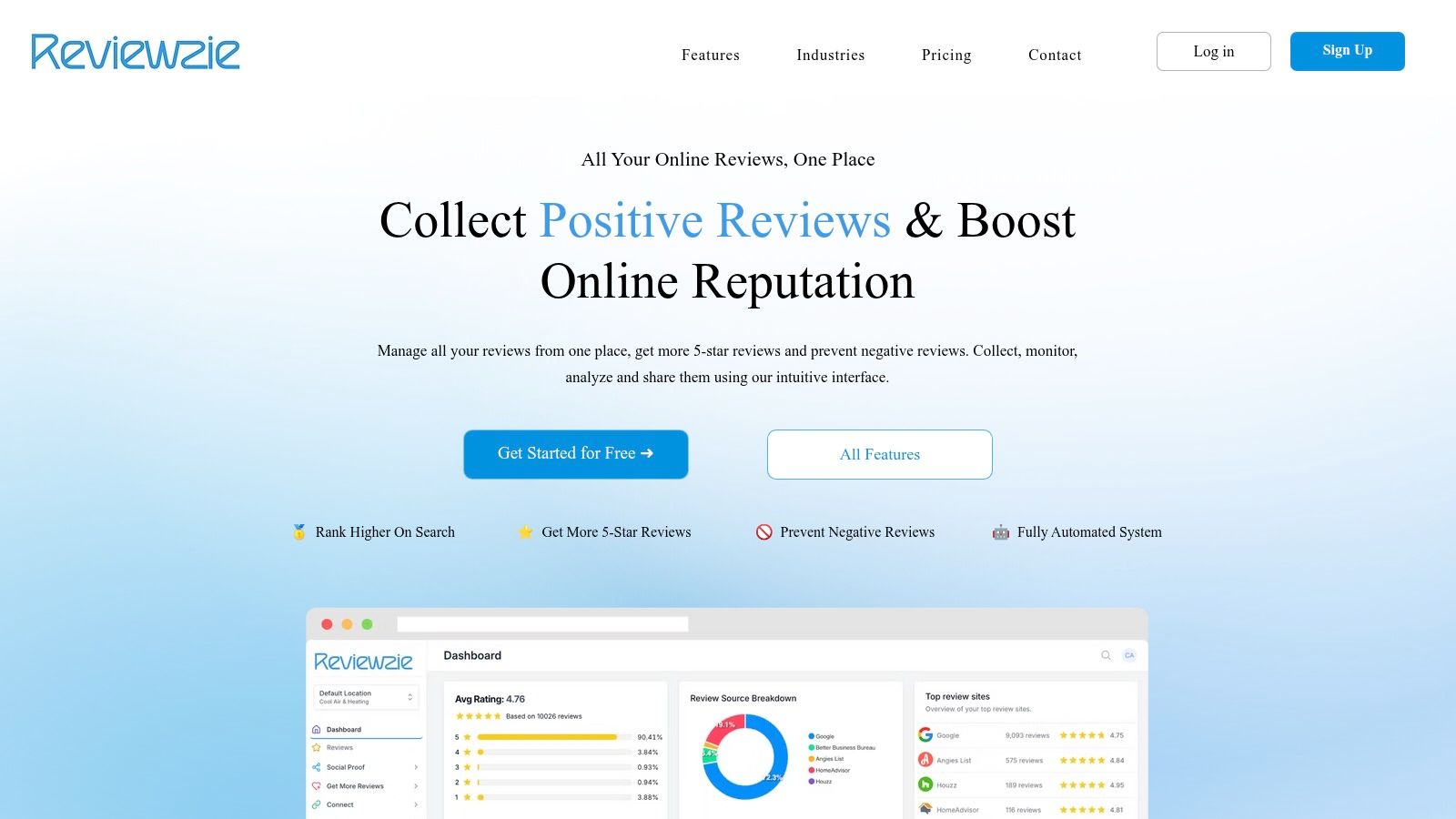
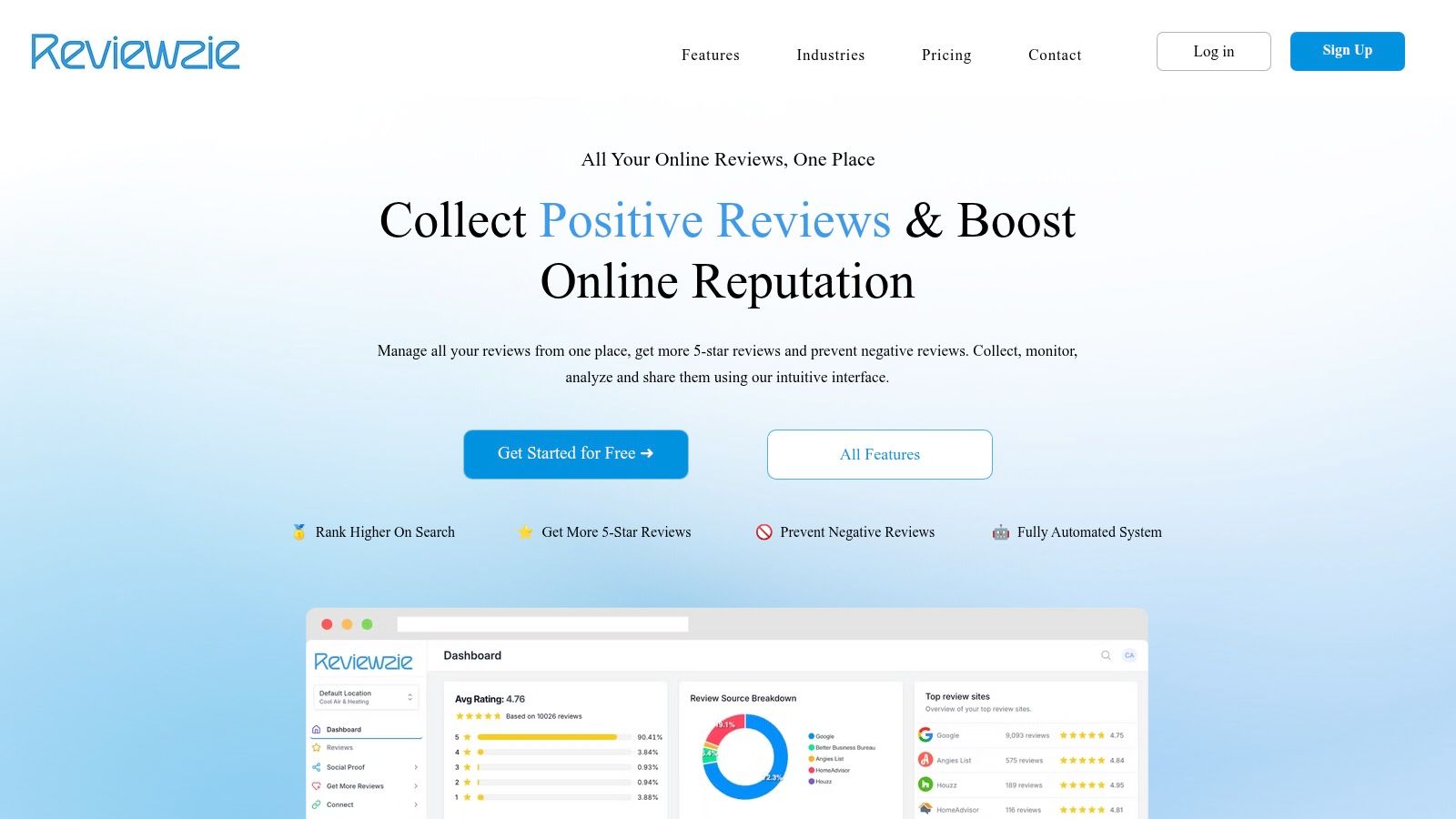
One option dealers use for this workflow is Reviewzie, which supports automated review requests through SMS, email, and WhatsApp, along with trackable links tied to location, campaign, or staff member. That matters when a store wants collection to happen automatically and still wants to know whether sales or service is carrying the review volume.
The goal isn't more requests. The goal is a request system that still works on the busiest Saturday of the month.
Mastering Review Responses and Engagement
Review responses fail for two reasons. They're either ignored, or they read like they were copied from a compliance binder.
Shoppers read responses to judge tone. They want to see whether the dealership sounds defensive, attentive, vague, or accountable. A flat "thank you for your feedback" repeated across every platform tells them almost nothing.
Build a response system instead of improvising
The best response workflow separates reviews into simple buckets:
Short positive review
Detailed positive review
Vague negative review
Specific complaint that needs follow-up
That keeps staff from overthinking every reply. The response doesn't need to be long. It needs to sound human, acknowledge the issue, and show that someone at the store is paying attention.
A manager can assign ownership like this:
Sales reviews: Sales manager drafts or approves.
Service reviews: Service manager owns first response.
Sensitive complaints: GM or fixed ops director handles escalation.
Multi-location groups: Corporate can set tone guidelines, while local staff personalize details.
Use templates, then personalize the middle
Templates save time. Blind copying causes damage. The fix is simple. Keep the opening and close consistent, then personalize one sentence around the actual experience.
Here are practical starting points.
Thanks for the kind words, [Customer Name]. The team appreciates you taking the time to share your experience with us. We're glad the visit went smoothly and hope to help again when you need us.
Thanks for the detailed feedback, [Customer Name]. It's great to hear that [staff name or department] made the process easier for you. The dealership appreciates the trust and the time you took to describe the experience.
We're sorry this visit didn't meet expectations. The dealership takes feedback like this seriously and wants to understand what happened. Please contact [manager name or department] so the team can review the details and work toward a resolution.
Thank you for bringing this to our attention. The experience described here isn't the standard the dealership aims to deliver. A manager should review the specifics directly, especially around [issue mentioned], and follow up to make this right.
The middle sentence is where the reply either feels real or fake. Mention the oil change turnaround. Mention the paperwork delay. Mention the advisor who communicated well. That one detail changes the entire tone.
A centralized dashboard helps because staff don't have to bounce between Google, Yelp, DealerRater, and other sites. AI-assisted drafting can also shorten the workload, but it still needs human review before posting. Speed matters. Accuracy matters more.
Turning Negative Feedback into a Business Asset
Most dealerships still treat negative feedback like a fire to put out. That's too narrow. A complaint is often the fastest way to spot a broken handoff, a weak advisor script, a pricing communication gap, or a service lane bottleneck.
The trick is getting that feedback before it hardens into a public review.
Private feedback protects the public profile
Automotive businesses that use private feedback forms to divert unhappy customers before public posting reduce negative public reviews by 38%, based on a 2024 industry benchmark study by SMG, as outlined in SMG's guide to navigating online reviews in automotive.
That number matters because it changes how a dealership should structure post-visit outreach. Instead of sending every customer directly to a public platform first, the store can create a branch in the journey. Happy customers can continue to a review site. Unhappy customers can submit a private complaint to management.
This isn't about hiding problems. It's about solving them in the right place first. A customer angry about a surprise fee, delayed pickup, or poor handoff wants a response. A private channel gives the dealership a chance to respond before the issue becomes permanent public shorthand for the whole store.
What managers should do with routed complaints
A private feedback form only works if someone owns the next step. Good dealerships route complaints based on type, not just urgency.
For example:
Service delay complaint: Send to the service manager with the RO and advisor attached.
Sales communication issue: Route to the sales manager with salesperson name and timeline.
Finance complaint: Escalate to leadership immediately because those reviews often signal trust problems.
A routed complaint with no follow-up is worse than a bad review. At least a bad review tells the customer someone saw it.
A tool with private feedback routing is practical. It gives managers a way to intercept dissatisfaction, document the issue, and correct the process behind it. The side benefit is obvious. The dealership protects its rating while learning where the underlying friction sits.
Amplifying Your Best Reviews to Drive Sales
A high rating helps. A visible, specific review helps more.
Many dealerships collect reviews and then leave them buried on third-party platforms. That wastes the strongest proof they have. A shopper on the website is already weighing trust, price, distance, and convenience. A strong review placed near the right action can reduce hesitation.
Put proof where buyers hesitate
The best locations for review visibility are the places where prospects stall:
Homepage: Reinforces first impression.
Service pages: Helps fixed ops customers decide whether to book.
Vehicle detail pages: Adds social proof near inquiry actions.
Contact and appointment pages: Reduces last-minute uncertainty.
A code-free widget is useful here because most dealerships don't want marketing, IT, and a vendor ticket involved every time they want to feature fresh feedback. The better setup lets staff filter reviews by topic, location, or department and place them where they matter.
Turn one strong review into multiple sales assets
A good review can work in several places if the dealership repackages it well.
A practical reuse checklist:
Website snippet: Pull a line about transparency, speed, or service quality.
Sales email signature: Add a short testimonial under manager or advisor contact details.
Social graphic: Turn a five-star customer comment into a branded post.
Directory presence: Keep business profiles active across the listings that support local trust. This free business directory list is a useful starting point for marketing teams auditing where the dealership appears.
Not every review belongs everywhere. A detailed sales review may work well on a VDP or finance page. A service review that praises clear updates belongs near scheduling and maintenance content. The point is placement, not volume. A few strong reviews in the right spots usually do more than a giant wall of testimonials no one reads.
Tracking Performance Beyond Star Ratings
The average star rating is too blunt to run a dealership.
It shows the symptom, not the source. A GM can stare at a 4-point-something rating all day and still not know whether the problem sits with sales follow-up, service communication, wait times, or one manager who responds badly under pressure. That's why the useful conversation in automotive reputation management isn't "How many stars did the store get?" It's "Which team created this pattern, and what changed?"
The real KPI is operational clarity
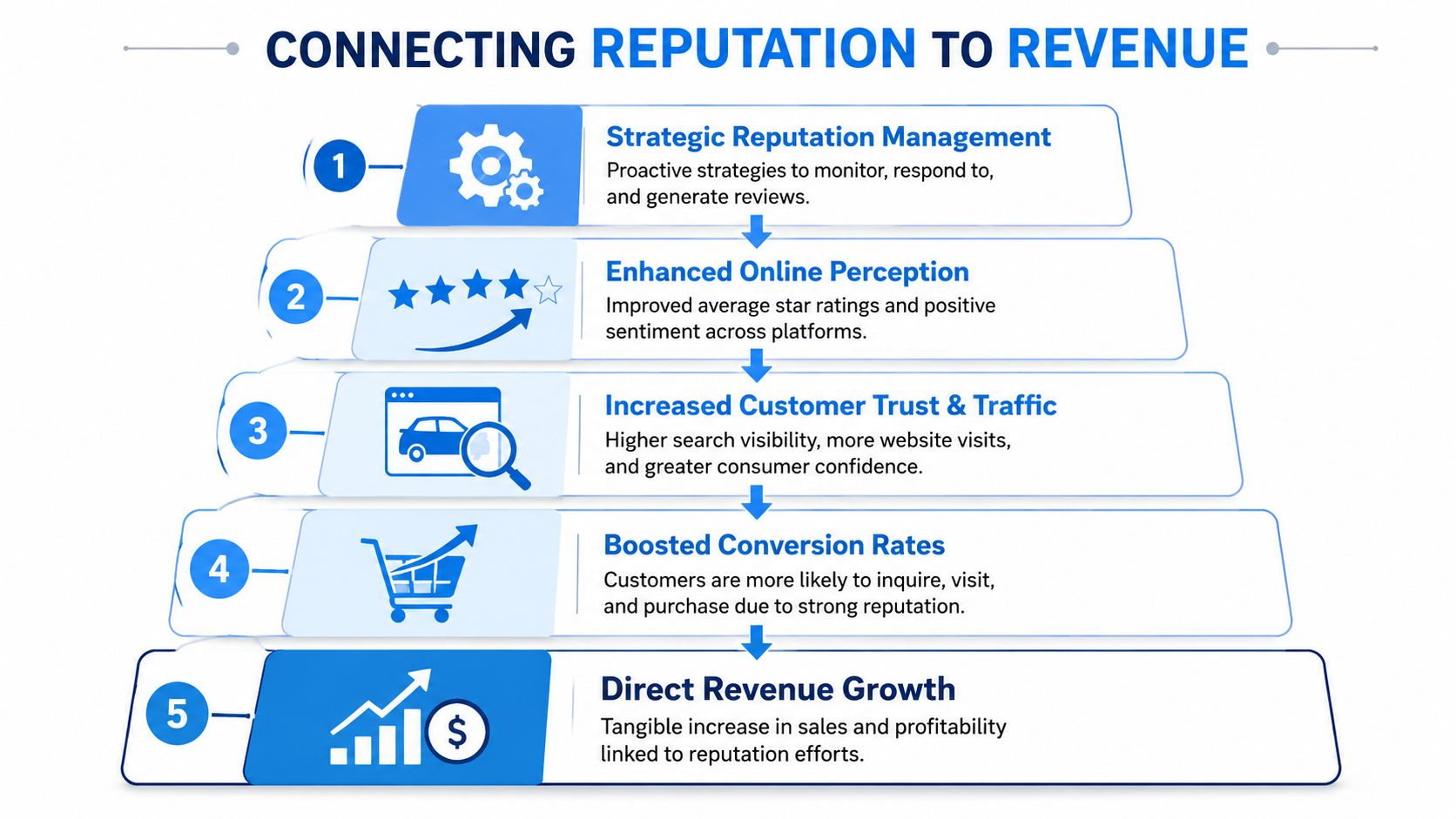
There is a direct business case for getting this right. A study by AutoSuccessOnline found that auto brands which improve their Reputation Score by 150 points can increase sales by up to 10% in the AutoSuccessOnline report on dealership reputation management priorities.
That same source also states that 72% of dealers still rely on manual tracking, which leads to complaint misattribution, and that emerging tools can reduce departmental blame by 35% through granular tracking.
That should sound familiar to anyone running a store. Manual tracking usually means screenshots in text threads, a spreadsheet no one updates consistently, and managers arguing over whether a bad review belongs to sales or service. By the time someone decides, the customer has already moved on.
How to attribute reviews by department and staff
Department-level attribution doesn't need a complicated rebuild. It needs unique paths.
A dealership can tag review requests by:
Department: Sales, service, parts, body shop, finance
Location: Useful for groups with multiple rooftops
Campaign: Delivery follow-up, first service visit, warranty work
Staff member: Advisor, salesperson, service manager, BDC rep
That can be done with distinct review links, QR codes, CRM automations, or post-visit campaigns tied to the source interaction. If the service lane sends one link and the sales delivery team sends another, management stops guessing. It starts seeing patterns.
For example, if service reviews dip while sales reviews remain strong, the issue probably isn't "the brand." It may be appointment load, advisor communication, or delayed pickup. If one salesperson consistently earns detailed praise while another receives neutral feedback, that creates a training opportunity that generic star averages never reveal.
Department-level tracking turns reputation from a marketing metric into a management tool.
A practical scorecard for managers
A useful internal scorecard doesn't need a dozen vanity metrics. It needs enough detail to prompt action in the weekly meeting.
A dealership can review:
Metric | What it tells the manager | Likely next action |
|---|---|---|
Review volume by department | Which team is actively generating feedback | Fix missed request triggers |
Sentiment theme by department | Whether complaints cluster around speed, communication, or trust | Assign coaching or process review |
Response ownership | Whether managers are engaging consistently | Reassign review response duties |
Staff-level praise frequency | Who customers mention positively | Reward and replicate behavior |
Private complaint categories | Which issues customers raise before posting publicly | Fix operational breakdowns quickly |
Broader reputation software offers significant assistance, particularly if the dealership wants one place to watch trends, compare locations, and identify recurring specific complaints. Teams looking at platform options can compare approaches in this overview of small business reputation management workflows, then adapt the same logic to dealership departments and multi-store operations.
The payoff isn't abstract. Managers stop wasting time on the wrong fix. Sales doesn't get blamed for service delays. Service doesn't absorb complaints caused by a finance handoff. The dealership can coach the right employee, change the right process, and defend the right part of the customer journey.
Your Next Move in Automotive Reputation Management
A dealership doesn't need a louder reputation strategy. It needs a tighter one.
That means five habits working together. Automate review collection so requests go out consistently. Respond with structure so every public interaction sounds attentive and credible. Route unhappy customers into private resolution when the issue should be handled inside the store first. Reuse strong reviews where buyers and service customers hesitate. Track performance by department and staff so management can fix causes instead of debating symptoms.
Most stores already know reviews matter. The gap is execution. Good automotive reputation management closes that gap by turning scattered tasks into a repeatable operating process. When the process is built correctly, the dealership spends less time firefighting and more time improving the customer experience behind the rating.
Dealership teams that want a single system for collecting reviews, routing private feedback, monitoring public platforms, and displaying customer proof on their site can start with a free trial of Reviewzie.
Generated with Outrank app
Comments